In this guide
Key takeaways
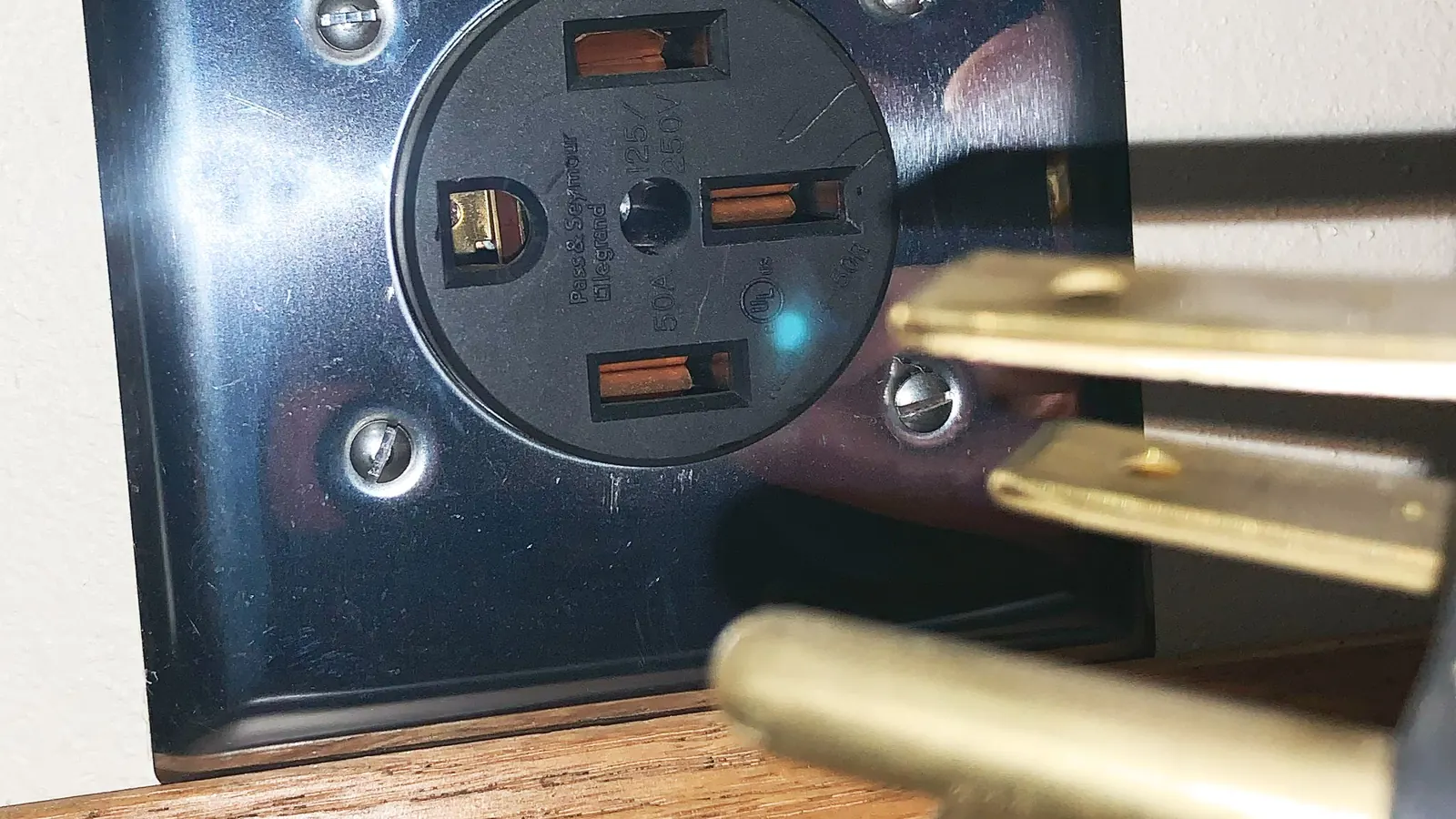
- A NEMA 14-50 outlet is on a 50 A circuit, so a plug-in charger can draw at most 40 A continuously (about 9.6 kW).
- Hardwiring on a 60 A circuit allows up to 48 A (about 11.5 kW), but only helps if your car's onboard charger accepts it.
- Outlets are easy to swap and portable; hardwiring removes the receptacle as a wear and heat point.
- Cost is driven by wire run and panel capacity more than plug vs hardwire. Get two quotes for both options.
The rule behind the numbers: 80% for continuous loads
EV charging is treated as a continuous load (it runs for three hours or more). The U.S. Department of Energy's Alternative Fuels Data Center notes that EV charging infrastructure is considered a continuous load under the National Electrical Code (NEC Article 625). Code requires circuits for continuous loads to be sized at 125% of the load, which is the same as saying the load may use only 80% of the circuit rating:
| Circuit breaker | Max continuous charging current | Approx. power at 240 V |
|---|---|---|
| 30 A | 24 A | 5.8 kW |
| 40 A | 32 A | 7.7 kW |
| 50 A (typical NEMA 14-50) | 40 A | 9.6 kW |
| 60 A (hardwired) | 48 A | 11.5 kW |
Power is simply volts × amps (240 V × 40 A = 9,600 W). A NEMA 14-50 receptacle is rated 50 A, so the most a plug-in charger can draw continuously is 40 A. To go higher, the charger must be hardwired.
Does faster even matter for your car?
Every EV has an onboard charger that limits how much AC power it accepts. If your car's onboard charger is rated around 7 to 9.6 kW, a 48 A hardwired unit won't charge it any faster than a 40 A plug-in unit. Check the "AC charging" or "onboard charger" spec in your owner's manual before paying extra for a bigger circuit. For the hours-to-full math at each power level, see how long it takes to charge an EV at home.
Plug-in (NEMA 14-50): pros and cons
- Pro: Easy to replace or upgrade the charger without an electrician.
- Pro: You can take the charger with you when you move (the outlet stays).
- Pro: The outlet can also serve other 240 V uses, such as an RV.
- Con: Capped at 40 A.
- Con: The receptacle is a failure point. Repeated heavy loads can overheat a cheap or loosely terminated outlet. Use an industrial-grade receptacle and have it installed to the manufacturer's torque spec.
- Con: Current code generally requires GFCI protection for 240 V receptacles in garages and outdoors, and a GFCI breaker can conflict with some chargers' own ground-fault protection, causing nuisance trips. Ask your electrician which combination works with your charger.
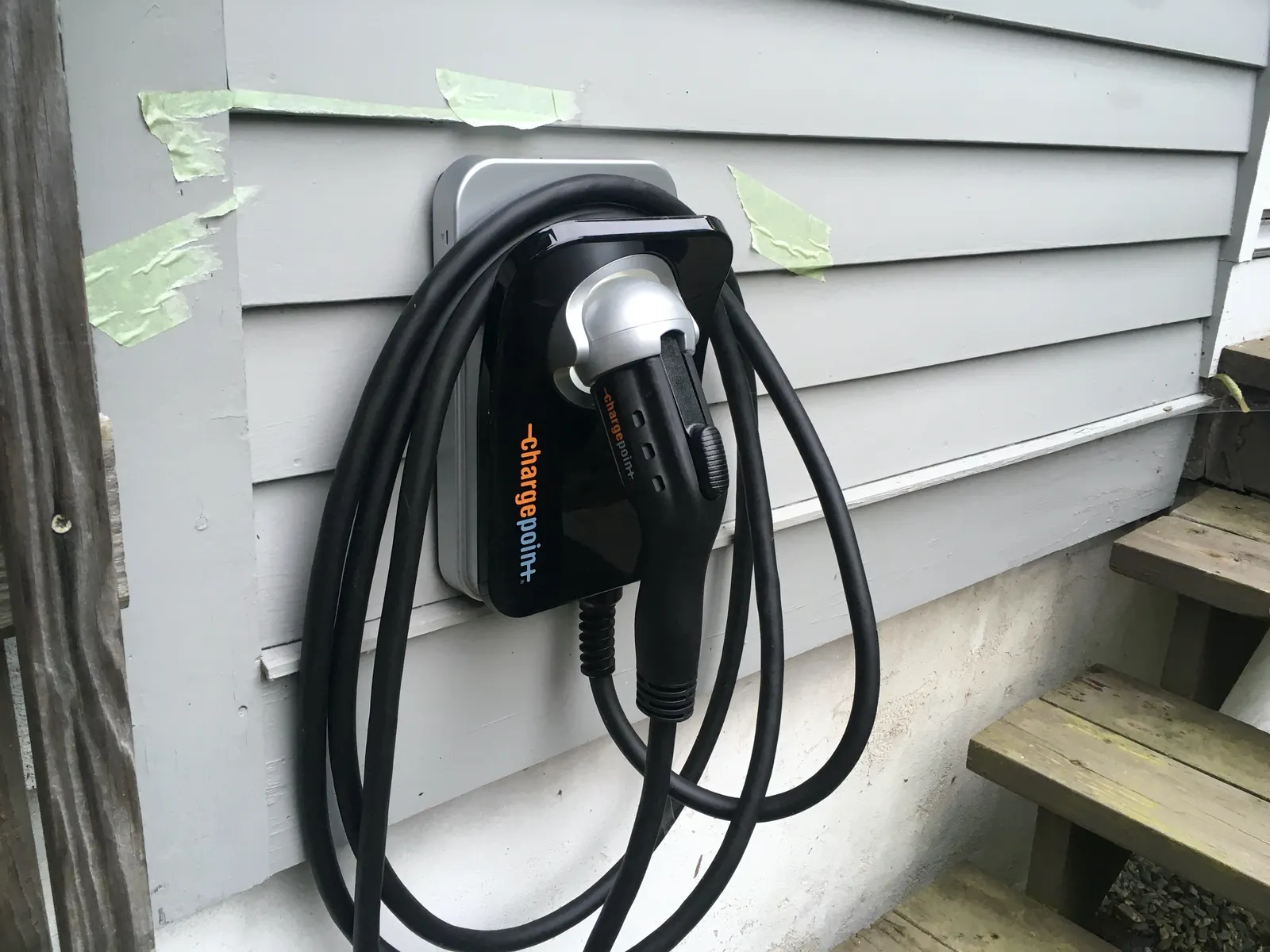
Hardwired: pros and cons
- Pro: Up to 48 A on a 60 A circuit, if your car can use it.
- Pro: No plug or receptacle to wear out, which is especially helpful outdoors.
- Pro: Many hardwired chargers let the installer set the max current, so you can match a smaller circuit now and upgrade later.
- Con: Replacing the charger means calling an electrician.
- Con: It stays with the house unless you pay to remove it.
Is the outlet cheaper?
Not always. Labor, wire run length, and panel capacity drive the cost far more than outlet vs hardwire. Once you add a GFCI breaker and a quality receptacle, the outlet route can cost about the same as hardwiring. Installers' published estimates for a straightforward attached-garage install generally land in the high hundreds to low thousands of dollars, and long runs, trenching or a panel upgrade can push it much higher. Get at least two quotes from licensed electricians and ask them to price both options.
Quick decision guide
- Renting, or moving within a few years? Plug-in.
- Car accepts 11 kW or more on AC and you drive a lot? Hardwired on a 60 A circuit.
- Charger mounted outside? Hardwired is the more robust choice.
- Limited panel capacity? Hardwired charger set to a lower current, or a load-management device. Ask about a load calculation before upgrading the panel.
The federal 30C home charger tax credit no longer applies to new installs after June 30, 2026; see what incentives are left before you buy.
Frequently asked questions
How many amps can an EV charger use on a NEMA 14-50 outlet?
40 amps continuous. The outlet is on a 50-amp circuit, and code limits continuous loads like EV charging to 80% of the circuit rating.
Is hardwiring an EV charger faster?
It can be. Hardwiring allows up to 48 amps on a 60-amp circuit (about 11.5 kW), but only if your car's onboard charger accepts that much AC power.
Does a NEMA 14-50 outlet for an EV need GFCI protection?
Under current code, 240-volt receptacles in garages and outdoors generally require GFCI protection. Check local amendments with your electrician.
Is a plug-in EV charger cheaper to install than hardwired?
Not necessarily. Once you include a GFCI breaker and an industrial-grade receptacle, costs are often similar. Wire run length and panel capacity matter more.
Sources
- U.S. Department of Energy AFDC: Charging electric vehicles at home (continuous load / NEC)
- Emporia Energy: Hardwire vs plug-in EV charger
- Qmerit: Cost to install a 240-volt outlet for an EV charger
- EV Charge Grid: EV charger installation cost by scenario
- r/evcharging discussion: NEMA outlet vs hardwiring
Researched and written by the Home EV Charging Guide editorial team from the primary sources listed above, fact-checked on Oct 18, 2026. AI tools assist our research and drafting; every claim is checked by hand before publishing. Read our editorial policy · Report an error