In this guide
Key takeaways
- Charging time ≈ kWh needed ÷ charging power (kW), plus roughly 10% for losses on Level 2 (an estimate).
- Level 1 (120 V) gives about 1.4 kW, a few miles of range per hour. Level 2 (240 V) gives about 7.7 to 11.5 kW.
- Your car's onboard charger caps AC charging speed, whatever the wall unit can deliver.
- If you drive about 30 miles a day, Level 1 overnight can be enough. Heavy daily driving favors Level 2.
Step 1: Work out your charging power
Power (watts) = volts × amps. Because charging is a continuous load, the current is limited to 80% of the circuit rating.
| Setup | Typical continuous current | Power |
|---|---|---|
| Level 1: 120 V, 15 A outlet | 12 A | ≈1.4 kW |
| Level 2: 240 V, 40 A circuit | 32 A | ≈7.7 kW |
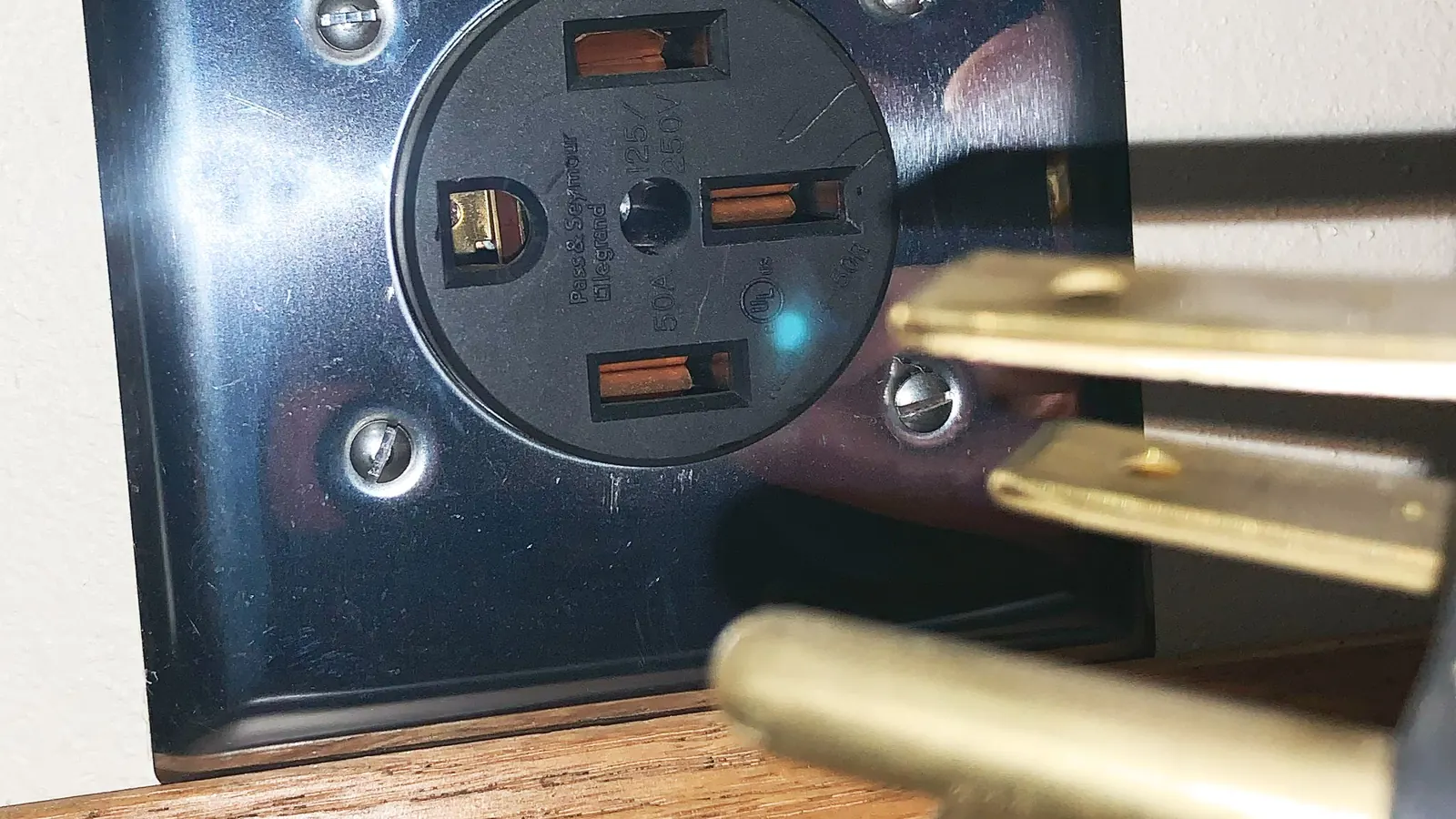
| Level 2: 240 V, 50 A circuit (e.g. NEMA 14-50) | 40 A | ≈9.6 kW |
| Level 2: 240 V, 60 A hardwired | 48 A | ≈11.5 kW |
Important: your car's onboard charger caps this. If it accepts 7.2 kW, plugging into an 11.5 kW charger still gives you 7.2 kW. Look up "onboard charger" or "max AC charging rate" for your exact model and trim.
Step 2: Work out how much energy you need
Take the usable battery capacity (in kWh) and multiply by the share you want to add. Going from 20% to 80% on a 75 kWh battery is 60% × 75 = 45 kWh.
Step 3: Divide, then allow for losses
45 kWh ÷ 7.7 kW ≈ 5.8 hours. Some energy is lost as heat in the charger and battery, and Level 1 charging tends to be less efficient than Level 2. As a rule of thumb (an estimate, not a spec) add roughly 10% to the time on Level 2 and more on Level 1. So call it about 6.5 hours, which fits comfortably overnight.
The same 45 kWh on Level 1 at 1.4 kW would take about 32 hours before losses. That's why Level 1 works best for people who drive short distances and plug in every night.
Miles of range added per hour
Multiply charging power by your car's efficiency in miles per kWh. Many EVs fall roughly in the 3 to 4 mi/kWh range in mild weather (an estimate; check your car's trip computer for your real number). Using 3.5 mi/kWh:
- Level 1 at 1.4 kW: about 5 miles per hour of charging
- Level 2 at 7.7 kW: about 27 miles per hour
- Level 2 at 11.5 kW: about 40 miles per hour (only if the car accepts 11.5 kW)
These are before losses, and cold weather lowers both efficiency and charging speed.
Why the last 10–20% can be slower
Charging slows near full, but at home this matters far less than at DC fast chargers because Level 2 power is already low compared with what the battery can take. Many manufacturers recommend setting a daily charge limit below 100% (often around 80%) for battery longevity; follow your manual.
Do you actually need Level 2?
Start from how far you drive. If you drive 30 miles a day, you need to put back roughly 30 ÷ 3.5 ≈ 9 kWh a night. Level 1 adds about 1.4 kW × 10 hours ≈ 14 kWh over a 10-hour night before losses, so it can cover that. If you regularly drive 60 miles or more a day, or need fast turnaround, Level 2 is worth it.
Choosing Level 2 also means choosing the circuit: see NEMA 14-50 outlet vs hardwired. The federal home charger tax credit has ended for new installs; check what's left for incentives before you buy.
Frequently asked questions
How long does it take to charge an EV on a regular 120V outlet?
Level 1 delivers about 1.4 kW, which adds only a few miles of range per hour. Adding 45 kWh would take over 30 hours, so Level 1 suits low daily mileage.
How long does Level 2 charging take?
Divide the kWh you need by the charging power. At about 7.7 kW, adding 45 kWh takes roughly 6 to 6.5 hours including losses, so most EVs can fill up overnight.
Why isn't my car charging faster on a bigger charger?
Your car's onboard charger limits AC charging power. If it accepts 7.2 kW, a higher-power Level 2 charger won't make it faster.
How many miles per hour does a Level 2 charger add?
Multiply power by your car's efficiency. At 7.7 kW and about 3.5 miles per kWh, that's roughly 27 miles of range per hour of charging, before losses.
Sources
Researched and written by the Home EV Charging Guide editorial team from the primary sources listed above, fact-checked on Oct 18, 2026. AI tools assist our research and drafting; every claim is checked by hand before publishing. Read our editorial policy · Report an error